Things that once existed only in science fiction are now part of everyday life. From artificial intelligence and 3D printing to entire digital worlds in our phones — today’s tech is closer than ever. But to keep up, you need to stay informed. That’s why Association Noosphere , together with the Dnipro branch of the Youth Academy of Sciences and the Junior Computer Academy ITSTEP, launched Noosphere Ed&Tech — an educational project designed for Ukrainian teens.
Noosphere Ed&Tech was a free online lecture series that ran for four weeks, bringing together experts in modern technology to share their knowledge with students. More than 200 teenagers from across Ukraine and abroad took part.
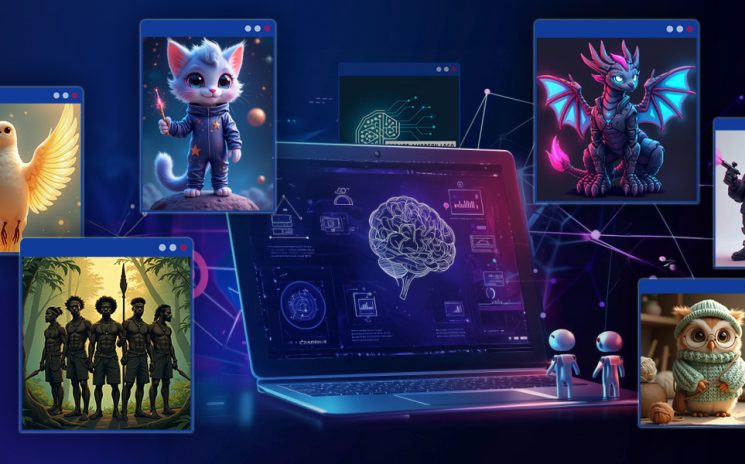
The first session focused on artificial intelligence. Andrii Svitlyi, a teacher from the Junior Computer Academy ITSTEP, showed students how to use AI tools in everyday life — from simplifying routine tasks to enhancing creativity. Together, they tested image generators, explored translation and text editing tools, and learned how to build eye-catching presentations with AI.
The second session was hands-on. Guided by Svitlyi, students applied what they’d learned to create their own brand — including a logo and mascot — using different AI platforms.
Next, Dr. Natalia Kharadzhan, an associate professor of physics and teaching methods at Kryvyi Rih State Pedagogical University, led a lecture on 3D printing. She explained how the printers work, what materials can be used, and what makes for a high-quality print. Students explored the different types of printers and the wide range of objects they can produce.
The final session, also practical, was led by Pavlo Merzlykin, associate professor in computer science and applied math at Kryvyi Rih State Pedagogical University. After learning about mobile app development for different platforms, students built a simple mobile game using App Inventor. In the game, players catch a funny mole to earn points. Merzlykin also explained how to increase the game’s difficulty and add more modes — encouraging students to keep developing their projects on their own.
Each session included time for questions and live interaction with the instructors. By the end, many students said they wished the project would continue.
“I wish there were more lectures,” shared one participant, Yan. “Four just isn’t enough — you’re only getting into it, and it’s already over.”